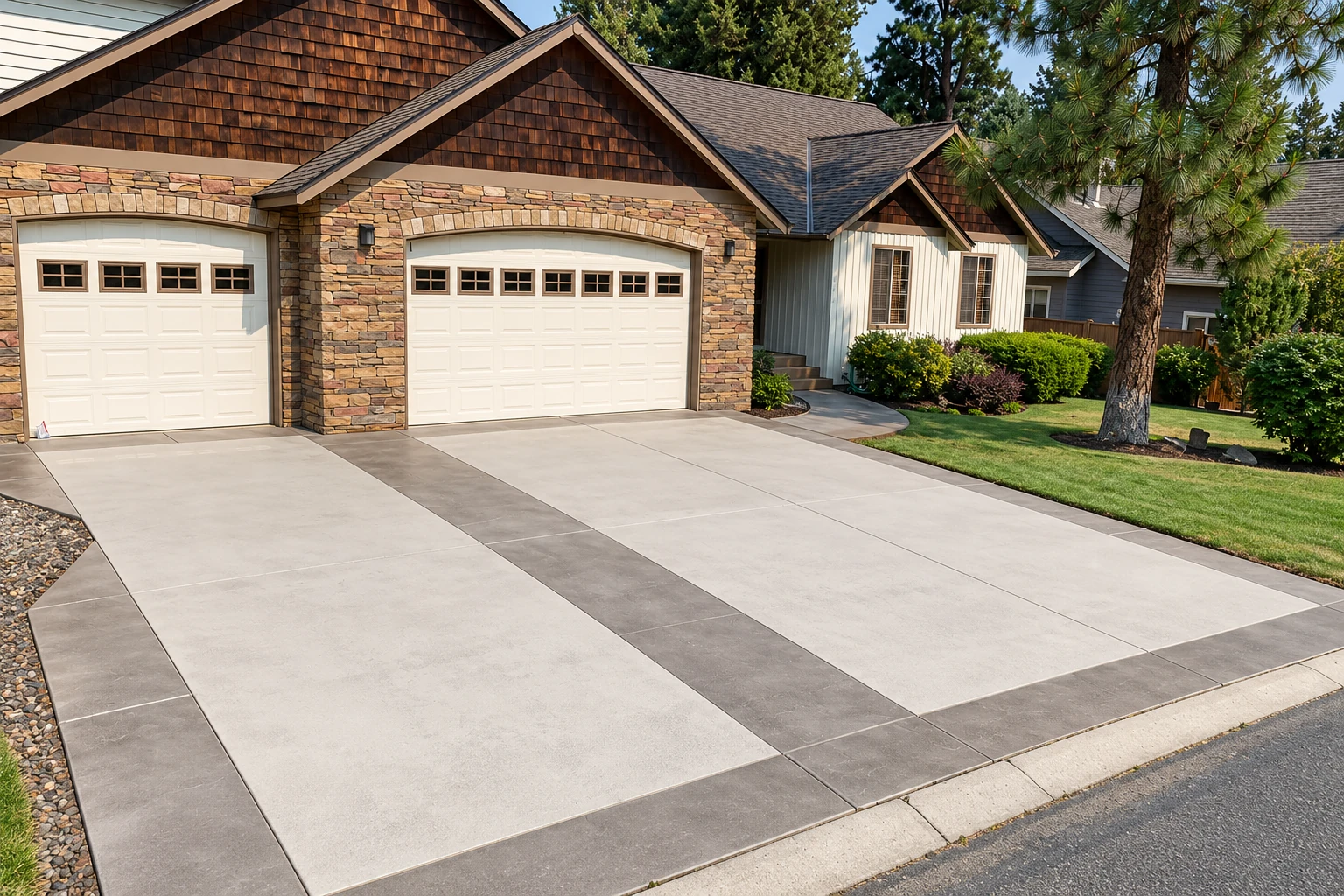
Concrete driveway building in Los Angeles CA - a slab that drains toward the street
Cracked, sinking or pooling driveway? We dig out, pack a solid base and pour a new slab that sheds water and holds up.
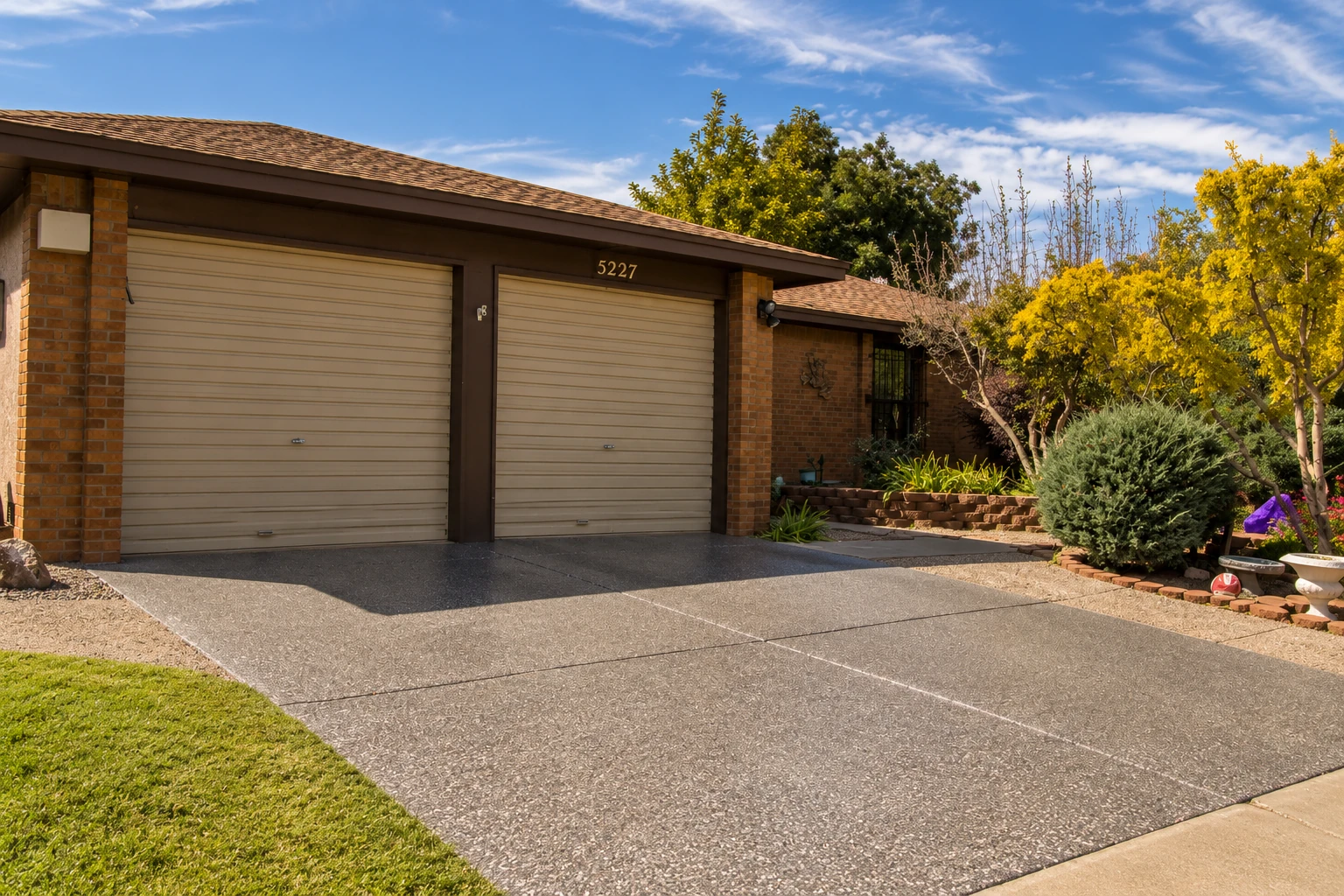
What does it take to build a new concrete driveway?
Concrete driveway building in Los Angeles means taking out the old surface, getting down to firm ground, packing a solid base and pouring a new slab sloped so rain runs toward the street instead of into your garage. The pour itself goes quickly, and most of the waiting comes after, while the concrete cures, or slowly hardens.
Most people call us when the driveway has cracked across, dropped at one end or holds a puddle by the garage door, and by then the trouble is usually underneath. The price moves with the size of the driveway, how much old concrete comes out, how much base your soil needs, how thick the slab is, any change to the apron at the curb and the finish, since a stamped pattern costs more than a plain one. The schedule turns less on the pour than on the city's permit for any curb work and the days the slab needs to cure. When I come out, I measure, walk the slope with you and give you a figure for your own driveway.
How our crew builds a concrete driveway
We break out and haul off the old driveway, then dig down to the subgrade, the firm soil the slab will sit on, because a base that's only raked level settles right along with the dirt. We pack in the base, set the forms and set the slope so water runs toward the street and away from your garage, and we talk through the apron at the curb early, since that part falls under the city's rules. Rebar, the steel bars laid inside the slab, goes in to hold the concrete together if it does crack. We place and finish the concrete, give the top a broom finish, a light dragged texture so tires and shoes grip when it's wet, and cut control joints, the lines that give the slab a planned place to crack, before it picks its own. Then it cures, and we help you plan somewhere else to park until it's ready. The base is buried by the end of day one, so it's the first thing a low bid cuts, and if your budget gets tight I'll trim the finish before I'll trim the base, because a bad base can't be fixed without tearing the slab out.
Driveway jobs often touch the rest of the yard. If the slab out back is in the same shape, concrete patio construction uses the same groundwork and I can look at it on the same visit, and if you'd like the driveway to look like stone or brick, our stamped concrete services press a pattern into the surface while it's still soft.
Broom-finished gray slab
This suits most homes, because it's the simplest finish to pour and the texture gives good grip on a wet morning. It also costs less, which leaves more of the budget for the base where it counts.
Stamped or colored surface
This suits a driveway that's part of how the front of the house looks, since the pattern and color can match the style of the home. It takes more labor on pour day, so it costs more than a plain slab.
Concrete driveway rules at the curb in Los Angeles
The apron, the stretch where your driveway meets the curb, is where Los Angeles rules come in, and the city's Bureau of Engineering typically issues an A-Permit for that work. In an "A" or "R" zone, the apron can't run more than 18 feet along the curb unless the city approves a deviation request, and where the curb sits less than 9 feet from your property line, a standard apron is ruled out and the city reviews a custom drawing instead. A driveway that looks steeper than about 12½ percent, up or down, may also need a grading plan. When your job needs a permit, we figure out which office covers your address and handle the application and inspections for you.
Under old slabs we often find soil that swells when it's wet and shrinks as it dries, which is common across the western states, and that calls for a crushed rock base, deeper where the soil moves more. If nobody knows what the soil is, the usual advice is to bring in a soils engineer, and I'll tell you when I think that's needed. We meet the same mix of older driveways, tight lots and sloped yards on jobs in Glendale and Pasadena.
Concrete driveway finishes and details
Why call us for driveway concrete
I estimate and lead the crew
I come out to look at your driveway and give the estimate myself, and I'm the one leading the crew when we pour. The slope and base we agree on at the curb are the ones that go in the ground.
Thirteen years of flatwork since 2013
I learned concrete from my dad, hauling and mixing before I ever finished a slab, and I started this business in 2013. We're known for driveways, patios and walks done right underneath, which is the part you can't check once it's poured.
Licensed for permitted, crewed jobs
We're fully licensed and insured. In California an unlicensed person can only take work under $1,000 that needs no permit and that they do with no one working for them, so a driveway with an apron permit or a hired crew calls for a licensed contractor.
Before you sign anything, ask each contractor what goes under the slab. Send us your driveway details or call (213) 329-1820, and I'll come take a look.
(213) 329-1820Get an on-site estimate for your driveway
We'll reply within one business day to set a time. Then I come out, look at your driveway and the curb, and give you a free estimate with no obligation.
Driveway questions from Los Angeles homeowners
How much does a concrete driveway cost in Los Angeles, California?
A 4-inch concrete slab, with labor and materials included, usually costs about $9 to $18 per square foot in California. That's the going rate for the work, not our quote, and where your job lands depends on the tear-out, the base your soil needs, the slope, any apron work at the curb and the finish. I'll give you your own number once I've seen the driveway.
How thick should a concrete driveway be?
A concrete driveway should be at least 4 inches thick. By industry figures, going to 5 inches adds roughly 20 percent to the concrete cost and nearly 50 percent to the weight the slab can carry. If your driveway sees a work truck, a camper or heavy deliveries, the extra inch is usually the better buy, and we'll talk through how you use it before we settle on it.
Do I need a permit for a driveway apron in Los Angeles?
Yes, the apron at the curb typically needs the city's A-Permit, whether it's new, repaired or widened. Before work starts, the city also asks for a pre-construction inspection meeting with its Bureau of Contract Administration. We set that up along with the rest of the permit, so you're not chasing offices.
How long does a new concrete driveway need to cure before I can drive on it?
Plan on at least a week, which is what one concrete guide advises so the slab can cure and harden before it carries a car. Cool weather can slow that down, so I'll tell you when yours is ready rather than guess.
Why does the crew start so early on driveway pour day?
Concrete sets faster in heat, and a concrete trade group's advice is to move, place and finish it promptly, with early morning pours whenever possible. A slab worked in the midday sun can end up with a weak, dusty top. So expect us early, and expect steady work once the truck shows up.
What causes cracks in a concrete driveway, and will my new one crack?
Cracks usually trace back to a base that settled or joints that were cut late or skipped. Control joints help prevent random cracking, and a random crack is generally not a structural problem, though it can be an eyesore. That's why we spend our effort on the base and cut the joints on time.
Plan your new driveway and curb apron together
Call (213) 329-1820 with your driveway's rough size, any steep slope and any curb change, so I come out ready for your lot.